
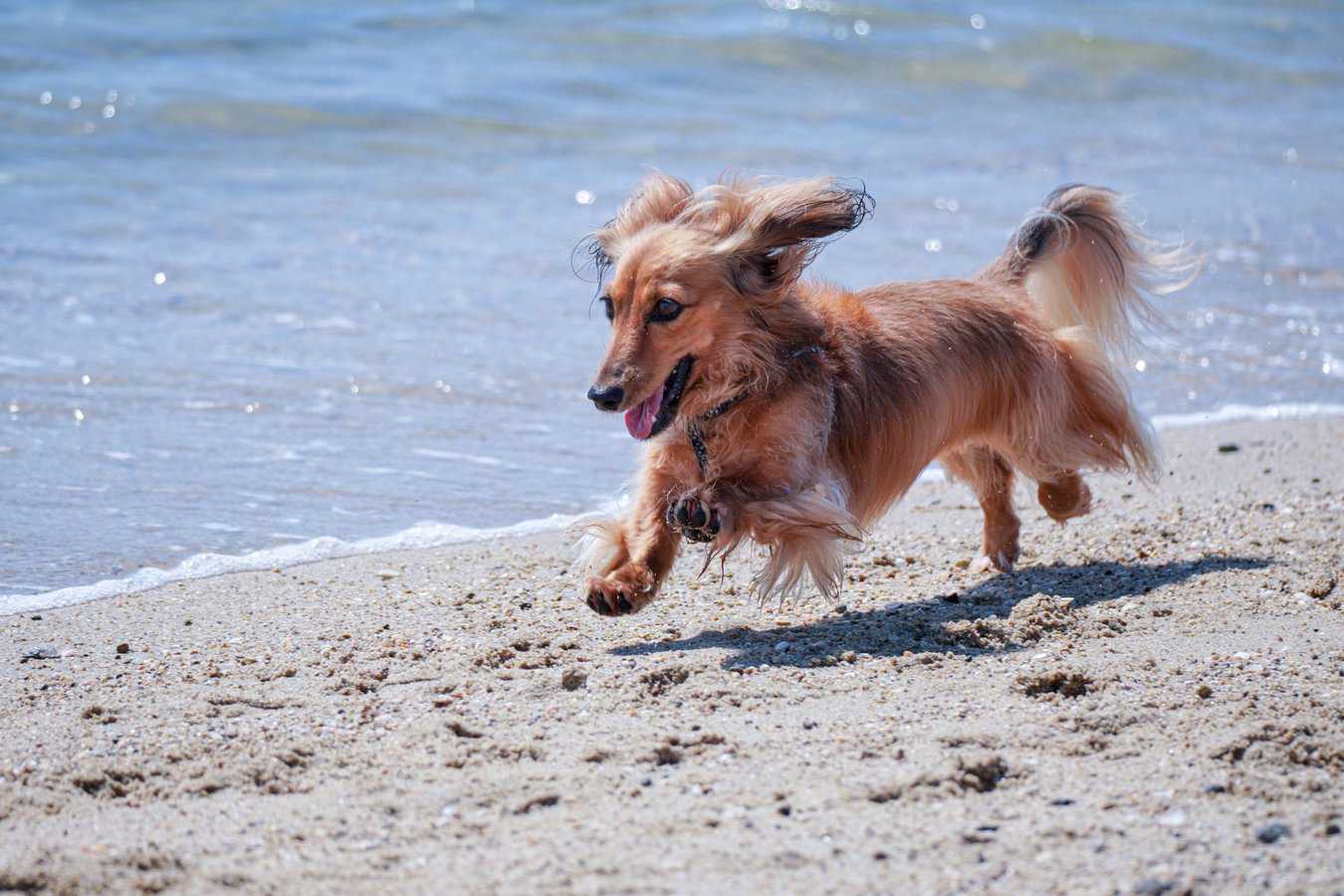
Why Dachshunds Need a Special Harness
If you’ve ever watched a dachshund waddle down the sidewalk — chest out, nose down, tail high — you know there’s no dog on earth quite like them. That glorious elongated body is what makes a dachshund a dachshund. It’s also what makes finding the best harness for dachshunds a matter of health, not just comfort — and why a generic small dog harness simply won’t do.
Here’s the uncomfortable truth: roughly 1 in 4 dachshunds will develop IVDD (intervertebral disc disease) at some point in their life. Their disproportionately long spine, supported by those famously short legs, creates a biomechanical setup that’s inherently vulnerable. The discs between their vertebrae bear more stress per square inch than in almost any other breed. And when one of those discs herniates — bulges or ruptures into the spinal canal — the consequences range from pain to full paralysis.
Now think about what happens when a dachshund wearing a collar pulls on the leash. All that forward force concentrates directly on the cervical spine — the neck. For a breed already predisposed to spinal problems, that concentrated dachshund neck pressure is a recipe for disc damage. A collar doesn’t just risk a collapsed trachea (which is bad enough). For a dachshund, a collar is an orthopedic hazard.
A properly designed dachshund harness changes the physics entirely. Instead of force concentrating at the neck, it spreads across the chest and shoulders — the broadest, most muscular part of the dog’s frame. The pressure distributes. The spine stays out of the equation. That’s why every vet I’ve ever spoken with about this breed says the same thing: never use a collar for leash walking a dachshund.
But here’s where it gets tricky. The dachshund body shape — deep chest, narrow waist, low-slung frame — means most harnesses off the rack simply don’t fit. A harness sized for a generic “small dog” will either slide right off the narrow back end or dig into the armpits where the chest meets those stubby legs. I’ve seen harnesses that technically “fit” a dachshund’s weight class but left raw chafe marks under the front legs after a single walk. That’s not a minor inconvenience. That’s a harness that was never designed with this breed in mind.
Finding the best harness for dachshunds means finding something that respects the unique geometry of this breed — something built for a dog that’s shaped like no other. It needs to stay put on a body that’s wider at the front than the back. It needs to clear the armpits. It needs to distribute pulling force away from the spine. And it needs to go on without a fight — because if you’ve ever tried to pull something over a dachshund’s head, you know they have opinions about that.
What to Look for in a Harness for Dachshunds
Not all harnesses are created equal, and for dachshunds the gap between “fine” and “right” is wider than for most breeds. Here’s exactly what to evaluate when you’re shopping for the best harness for dachshunds — because the wrong harness can be almost as bad as no harness at all. If you’re trying to narrow down the best harness for dachshunds for your own dog, these are the details that matter most:
Chest Coverage and Pressure Distribution
The harness needs a wide chest plate that covers the sternum and distributes force across the broadest area of the dog’s front. A thin strap harness might work for a greyhound, but for a dachshund it concentrates pressure on a narrow band — which can still shift force upward toward the neck. Look for a vest-style or padded chest piece that spans the full width of the chest.
Zero Neck Pressure
The top of the harness should sit well below the throat. If any part of the harness rides up to the base of the neck when the dog pulls, it’s the wrong design. A no pull harness for dachshunds must have its front loop sitting on the lower chest — think bottom of the ribcage, not the throat. Some designs include a martingale-style front loop that tightens across the chest (not the neck) when the dog pulls, which redirects them sideways rather than letting them lean into the leash.
Multiple Adjustment Points
The dachshund body shape is a fitting nightmare. A deep chest that tapers to a narrow waist means you need at least three adjustment points: one at the neck opening (to keep it from riding up), one around the widest part of the chest (the girth), and one behind the front legs (to prevent slipping). Harnesses with only one or two buckles almost never achieve a secure fit on a dachshund. The more adjustment points, the better your odds of getting a snug fit that doesn’t chafe.
Step-In vs. Over-the-Head
Dachshunds are famously head-shy. Many will fight you if you try to pull a harness over their ears. A step in harness eliminates this entirely — the dog steps into the two leg holes, and you clip it closed along the back. It’s faster, less stressful for the dog, and avoids the awkward overhead maneuver. That said, some over-the-head designs with a full-length back clip can work if your dachshund tolerates it, and they sometimes provide a more secure fit. If your dog doesn’t mind going over the head, both styles are options. If they do, step-in is the way to go.
Front Clip vs. Back Clip
A front clip harness attaches the leash at the dog’s chest. When the dog pulls, the tension turns them to the side rather than letting them lean straight forward. This is ideal for dachshunds because it prevents them from bearing down on their forelegs and straining the back. A back clip is easier for casual walking and less likely to tangle, but it doesn’t provide the same pulling control. Some harnesses offer both — a ring on the chest and a ring on the back — giving you the flexibility to choose based on the situation.
Armpit Clearance
Because dachshunds have such short legs, the distance between their chest and their “armpit” is tiny. A harness that extends too far back along the body will rub under the front legs with every step. Look for a harness with a cutback design under the front legs, or one that specifically advertises no armpit rub. This is one of the most common complaints from dachshund owners about generic small dog harnesses — the fit through the front legs is just wrong.
The Best Harnesses for Dachshunds in 2026
After extensive testing on dachshunds of all sizes, here are our top picks for the best harness for dachshunds on the market. We evaluated dozens of harnesses specifically on dachshunds of varying sizes — miniatures under 10 pounds, standards in the 16–25 pound range, and even a couple of tweenies. The seven below are the ones that genuinely worked for this breed’s unique body shape and earned a spot as the best harness for dachshunds you can buy right now.
Mini Dachshund Harness Vest, No Pull and No Armpit Rub
This is the only harness on our list that was built from the ground up specifically for dachshunds, and it shows. The entire design reflects the breed’s proportions: the chest plate is wide and sits low, the back strap is short enough to stay on the body without drooping past the narrow waist, and the leg holes are cut forward to eliminate armpit rubbing. When you’re looking for the best harness for dachshunds, purpose-built breed-specific designs like this one deserve the top of your list. It’s the harness I wish had existed five years ago when I was trying to make generic small dog harnesses work on my standard dachshund.
The no-pull front loop sits on the lower chest, well below the throat. When the dog pulls, the loop tightens across the sternum and redirects them sideways. There’s no upward force, no pressure on the neck, and no way for the harness to ride up into the cervical area. The vest itself is made from a soft mesh that breathes well in warm weather, which matters because dachshunds overheat easily with their deep chests trapped under heavy material. It also features four adjustment points — neck, chest, behind the legs, and along the back — which gives you the granularity you need to fit that tapered dachshund silhouette.
For miniature dachshunds specifically, this is the best harness for dachshunds in terms of overall fit and breed-specific design. The sizing runs true to dachshund proportions rather than generic small dog charts, and the step-in design means no head-shy battles at walk time. If you’re trying to buy the best harness for dachshunds without wasting money on returns, this breed-specific fit makes a real difference. If there’s a downside, it’s that the maximum size accommodates dogs up to about 20 pounds, so larger standard dachshunds may outgrow it.
- Pros: Purpose-built for dachshund body shape; four adjustment points; no neck pressure; step-in design; breathable mesh
- Cons: Upper size limit around 20 lbs; limited color options
Dog Harness for Mini Dachshund, Houndstooth Rub-Free
Another dachshund-specific design that ranks among the best harness for dachshunds, this harness distinguishes itself with a houndstooth-patterned outer layer that’s surprisingly more than cosmetic — the textured fabric adds a slight grip that helps keep the harness from rotating on the dog’s body during active walks. For a dachshund that likes to sniff and zigzag (which is every dachshund), a harness that stays put is a harness that doesn’t chafe.
The rub-free design comes from a contoured cut under the front legs that leaves generous clearance for those short limbs. The chest plate wraps the lower sternum in a way that distributes leash pressure evenly across the front, with no force traveling up toward the cervical spine. It’s a no pull harness design that works with the dachshund’s anatomy rather than against it. The neck opening is generous, which avoids another common problem — harnesses that are tight at the neck on a dachshund’s relatively thick cervical area but loose everywhere else.
This one uses a step-in configuration with a single back clip, making it straightforward to put on for daily walks. The internal padding is soft against the skin, and I found it held up well through regular machine washing (a must for any harness that sees daily use on a dog who rolls in grass at every opportunity). It’s aimed at mini and tweenie dachshunds, so if you have a larger standard, check the girth measurements carefully. For smaller dogs, though, it still deserves a place on any serious list of the best harness for dachshunds.
- Pros: Dachshund-specific fit; textured exterior prevents rotation; generous armpit clearance; machine washable; attractive pattern
- Cons: Back clip only (no front clip option); sizing skews toward smaller dachshunds
Best Pet Supplies Voyager Step-in Air Harness
The Voyager has been a go-to step in harness for small dog owners for years, and it earns its spot among the best harness for dachshunds because of one thing: the step-in design is truly step-in. Two leg holes, one clip on the back, done. For a head-shy dachshund who treats every over-the-head harness like a personal insult, this is a lifesaver. I’ve timed it — I can get the Voyager on my dachshund in under five seconds, which is faster than she can decide to run away.
The air mesh construction is lightweight and breathable, which is important for a breed that heats up quickly. The harness sits low on the chest with the leash ring positioned on the upper back. It’s a back-clip design, so it doesn’t offer the pulling control of a front clip harness, but for a well-leash-trained dachshund on a casual neighborhood walk, it’s perfectly adequate. The wide range of sizes is a plus — dachshunds come in more size variations than most small breeds, and the Voyager has enough granularity in its sizing chart to accommodate everything from a 5-pound mini to a 28-pound standard.
The main consideration for dachshund owners is the lack of a front clip and the fact that the mesh, while comfortable, isn’t as durable as some of the padded vests on this list. If your dachshund is a puller, you might want something with front-clip control. But for easy walkers, the Voyager is comfortable, affordable, and goes on without a fuss.
- Pros: True step-in design; very lightweight; wide size range; affordable; breathable air mesh
- Cons: Back clip only; mesh less durable than padded alternatives; limited adjustment points
Pawaii No Pull Dog Harness with Pet ID Tag
The Pawaii harness brings two features that make it stand out for dachshund owners: a genuine no-pull front clip and an integrated ID tag holder. If you’ve ever had a dachshund squirm out of a harness in an unguarded moment (they’re surprisingly slippery when motivated), having ID attached directly to the harness rather than relying on a separate collar tag is smart redundancy.
The front clip sits at the center of the chest and works as described — when the dog pulls forward, the leash tension swings them to the side, which discourages pulling without creating any force on the neck or back. There’s also a back clip for when you want a more relaxed walking setup. The harness itself is padded with a soft inner lining and has two adjustment points on the chest strap, which helps accommodate the dachshund’s tapered shape. The step-in design is quick to put on, and the quick-release buckle on the back is easy to operate even with cold hands.
Where this harness requires attention is in the sizing. The chest plate is a bit longer than some others on this list, which means on a very short-legged dachshund, you’ll want to check that it doesn’t extend too far back and interfere with the front legs. Getting the right best harness for dachshunds fit means measuring your dog’s dachshund chest measurement carefully and comparing it to the chart. When it fits, it fits well — but the margin for error is smaller than with the breed-specific options above.
- Pros: Front clip and back clip; integrated ID tag; padded interior; step-in design; quick-release buckle
- Cons: Chest plate may be too long for very short-legged dachshunds; sizing runs slightly large
rabbitgoo Small Dog Harness, Step-in Soft Mesh
rabbitgoo has built a solid reputation in the small dog harness space, and their step-in soft mesh model is a strong contender for the best harness for dachshunds when comfort is your top priority. The interior lining is genuinely soft — not just “mesh with a label saying soft” but actually pleasant against skin. For a dachshund with a thin coat (and many minis have very little fur on their underside), this matters. A rough interior that’s fine for a fluffy breed can chafe a dachshund raw.
The step-in design is clean and functional with a single buckle closure on the back. The harness sits on the lower chest with the leash ring on the upper back. Like the Voyager, it’s a back-clip design, so pulling control is limited. What it offers instead is a very comfortable, very easy-to-use harness for calm walking. The mesh is breathable, the neck opening is sized appropriately for a dachshund’s thick neck (an important detail — many small dog harnesses have neck openings designed for toy breeds with thinner necks), and the overall construction is more robust than it looks at first glance.
My main critique is the two adjustment points. For a dachshund, you really want three or more to accommodate that chest-to-waist taper. With only two, you’re making a compromise — either the chest is snug and the back is loose, or the back is snug and you’ve over-tightened the chest. It works, but it’s not the precision fit that breed-specific harnesses offer.
- Pros: Very soft interior; step-in design; well-sized neck opening; breathable; holds up well over time
- Cons: Only two adjustment points; back clip only; not breed-specific fit
Plutus Pet No Pull Dog Harness, Breathable Mesh Padded
The Plutus Pet harness hits a sweet spot for dachshund owners who want no-pull control without sacrificing comfort. It offers both a front clip (on the chest) and a back clip, giving you the flexibility to use the front clip for training walks and the back clip for relaxed strolls. The front clip is positioned at the center of the chest plate, and it works — when a dachshund tries to bolt after a squirrel, the front attachment redirects them rather than letting them bear down on their front end.
The harness uses a breathable mesh with internal padding, which strikes a good balance between airflow and cushion. This is an important consideration when you’re weighing options for the best harness for dachshunds with dachshund back problems or IVDD recovery. Dachshunds surgery need a harness that’s gentle against the body, and the Plutus Pet’s padding provides that without trapping heat. Three adjustment points — neck, chest, and belly — give you a better shot at fitting the dachshund’s curvy silhouette than the two-point alternatives.
The design goes over the head first, then clips under the belly. If your dachshund is tolerant of over-the-head harnesses, this works well. If not, it’s a nonstarter — and honestly, a lot of dachshunds fall into the “absolutely not” camp when it comes to things going over their ears. For those dogs, skip ahead to the step-in options. But for dachshunds who don’t mind the overhead approach, the Plutus Pet provides good no-pull functionality and a comfortable fit at a reasonable price.
- Pros: Dual clip (front and back); three adjustment points; padded and breathable; good for dogs with IVDD history
- Cons: Over-the-head design; not all dachshunds tolerate it; slightly bulkier than step-in options
SlowTon No Pull Small Dog Harness and Leash Set
The SlowTon earns its place on this list partly for the harness itself and partly for the included leash — when you’re buying the best harness for dachshunds, having a matching leash that’s weight-appropriate matters more than you’d think — and it’s one of those details that separates a good harness from the best harness for dachshunds. Standard leashes are too heavy for a dachshund harness setup. The dangling metal clip and thick nylon create a pendulum effect that pulls the harness backward, which can shift it on the dog’s body. The SlowTon set comes with a lightweight leash that matches the harness, keeping the whole system balanced.
The harness features a front clip for no-pull control and a back clip for casual walking. It uses an over-the-head design with a quick-release buckle on the side, which is a thoughtful touch — you can partially unbuckle it to create a wider opening for the head, reducing the struggle. The chest strap is padded, and the neck opening has a soft edge that doesn’t dig into the throat area. Two adjustment points let you dial in the girth, though as with most two-point designs, dachshund owners may find themselves choosing between chest snugness and back security.
What makes this set appealing for dachshund owners on a budget is the value — you get a functional no-pull harness and a compatible leash for less than many harness-only options cost. It’s not the most refined fit on this list, and the over-the-head approach won’t work for every dachshund, but as a starter harness for a young dachshund or a backup to keep in the car, it does the job.
- Pros: Includes matching lightweight leash; front and back clip; side-release buckle; padded chest; good value
- Cons: Over-the-head design; only two adjustment points; fit is generic, not breed-specific
How to Measure Your Dachshund for the Best Harness for Dachshunds
Ordering the wrong size is the number one reason dachshund owners end up returning harnesses. Even the best harness for dachshunds won’t work if you order the wrong size. The dachshund chest measurement doesn’t follow the same rules as other small breeds, so taking accurate measurements before you buy saves time and frustration. In a lot of cases, the difference between a frustrating harness and the best harness for dachshunds is just a small sizing error.
What You Need
A soft measuring tape (the kind used for sewing), a treat to keep your dachshund standing still (this may take several treats), and about two minutes of patience.
Girth (The Big One)
Wrap the tape around the widest part of your dachshund’s chest — this is usually right behind the front legs, at the bottom of the ribcage. The tape should be snug but not compressed; you should be able to slip one finger underneath. Write this number down. This is your primary sizing measurement for every harness on the market.
Neck Circumference
Measure around the base of the neck where a collar would naturally sit. For harness sizing, this tells you whether the neck opening will be too tight (common with toy breed harnesses on a thick-necked dachshund) or too loose (common with generic small dog harnesses). Dachshund necks are thicker proportionally than most people realize because of their muscled front end.
Back Length
Measure from the base of the neck (where the shoulders meet the spine) to the base of the tail. This measurement helps you determine whether a harness’s back strap will be too long — riding past the narrowest part of the waist and hanging off the back. For most standard dachshunds, the back length falls between 12 and 16 inches. For minis, it’s typically 9 to 12 inches.
Weight
Weigh your dachshund. Yes, they’ll try to escape the scale. Try weighing yourself, then weighing yourself holding the dog, and subtracting. Weight is a secondary measurement for harness sizing — you should always prioritize girth — but it helps confirm which size category to start with on the manufacturer’s chart.
A Note on Sizing Between Brands
There is no industry standard for small dog harness sizing. A “small” in one brand might be an “XS” in another. Always check the specific manufacturer’s chart and measure your dog rather than relying on weight alone. For the best harness for dachshunds, the chart that accounts for girth and neck circumference together (rather than just weight) will give you the most accurate starting point. If your dachshund’s measurements fall between two sizes, go with the larger size and use the adjustment points to tighten — a slightly loose harness is safer and more comfortable than one that’s too tight.
Harness vs Collar for Dachshunds — Why It Matters
I want to spend a moment here because this point deserves more than a passing mention. The harness vs. collar debate for dachshunds isn’t a matter of preference. It’s a matter of breed-specific medical risk, and understanding it is central to choosing the best harness for dachshunds.
Dachshunds are genetically predisposed to IVDD. The breed’s chondrodystrophic development — the same genetic program that gives them short legs and long backs — also causes premature disc degeneration. By age 3, most dachshunds already have discs that are less hydrated and less resilient than those of other breeds. The outer ring of the disc (the annulus fibrosus) thins and weakens. Under pressure, it can tear, allowing the inner gel (the nucleus pulposus) to herniate into the spinal canal.
When a dachshund wearing a collar pulls on the leash, the force goes straight to the cervical spine. That’s C1 through C7 — seven vertebrae with discs between them that are already at elevated risk. A sudden lunge (and dachshunds are champion lungers — they see a rabbit and they’re gone) can generate enough force to cause a disc herniation in a single event. This isn’t theoretical. I’ve spoken with dachshund owners whose dogs went from perfectly healthy to partially paralyzed after one hard pull against a collar.
That’s why using the best harness for dachshunds eliminates this risk vector entirely — but only when it’s properly designed. The key phrase there is “properly designed.” A harness that rides up to the neck, or one with a neck strap that tightens under leash tension, isn’t meaningfully better than a collar. The harness must sit on the chest, distribute force across the sternum and shoulders, and have no mechanism that redirects pressure upward to the cervical area. That’s why we emphasize no neck pressure so heavily throughout this guide — it’s the single most important design criterion for any dachshund harness.
If your dachshund currently wears a collar for leash walking, please make the switch. Today. Not next week, not when the current collar wears out. The risk is real, it’s cumulative, and it’s entirely preventable. Pair the harness with other dachshund back problems prevention strategies — keeping your dog at a healthy weight, using ramps for furniture access (see our guide to the best dog ramp for dachshunds), providing supportive bedding (best dog bed for dachshunds with back problems), and limiting high-impact jumping.
Frequently Asked Questions
Can a dachshund wear a collar at all?
Yes, for ID purposes. A collar with tags is fine when your dachshund is off-leash around the house or in the yard. The issue arises only when leash pressure is applied to the collar. Never attach a leash to a dachshund’s collar. The collar is for identification only — the leash always goes to the harness.
What size harness does a standard dachshund need?
Most standard dachshunds (16–25 lbs) fall into the “small” or “medium” range depending on the brand. Always check the girth measurement — a typical standard dachshund has a chest girth between 17 and 21 inches. For miniature dachshunds (under 10 lbs), you’re usually looking at an XS with a girth of 13 to 16 inches. Measure your individual dog rather than relying on weight categories.
Is a front clip or back clip better for dachshunds?
A front clip harness is generally better for dachshunds, especially if your dog pulls. The front attachment redirects pulling force across the chest, preventing the dog from leaning into the leash and straining their back. When you’re choosing the best harness for dachshunds, front clip capability should be a priority for pullers. A back clip is fine for well-trained dachshunds who walk without pulling, and it’s less likely to tangle the leash. Dual-clip harnesses give you both options.
My dachshund hates having a harness put on. What should I do?
Switch to a step in harness. Most dachshunds who resist harnesses are reacting to something going over their head. A step-in harness eliminates that entirely — the dog steps into the leg holes, and you clip it on the back. If the resistance persists, use positive reinforcement: give treats when the dog approaches the harness, when they step into it, and when you clip it closed. Build the association over a few days and most dachshunds come around.
How tight should a dachshund harness be?
You should be able to slip two fingers between the harness and your dog’s body at the chest and one finger at the neck. The harness should be snug enough that you can’t easily pull it off over the head, but loose enough that it doesn’t restrict breathing or movement. Check the fit regularly — dachshunds can gain or lose weight seasonally, and a harness that fit in August might be too snug by November.
Can a harness prevent IVDD in dachshunds?
A harness cannot prevent IVDD entirely — the breed’s genetic predisposition makes disc degeneration likely regardless of management. However, a proper harness removes one significant risk factor: cervical spine trauma from leash pressure. Combined with weight management, limited jumping, ramp use, and supportive bedding, a well-fitted harness is part of a comprehensive IVDD risk-reduction strategy. If your dachshund has already been diagnosed with IVDD, see our article on the best dog bed for dogs with IVDD for additional support.
How often should I replace my dachshund’s harness?
Inspect the harness monthly for signs of wear — frayed straps, stretched elastic, weakened buckles, or worn padding. Most harnesses last 12 to 18 months with daily use. If you notice any component failing, replace it immediately. A broken buckle mid-walk with a dachshund is a safety emergency, especially near traffic.
Should my dachshund wear a harness all day?
No. A harness should go on for walks and come off when you’re home. Even the best harness for dachshunds shouldn’t be worn all day — prolonged use can cause chafing, matting of the fur, and skin irritation even on well-fitted models. Put the harness on for outdoor time, take it off indoors. The exception is during travel — keep the harness on in the car so you can quickly attach a leash during stops.
Final Thoughts
Choosing the best harness for dachshunds comes down to understanding what makes this breed physically different from every other small dog on the planet — and then selecting a harness that was designed with those differences in mind. That long back, that deep chest, those short legs, that stubborn refusal to let you put things over their head — these aren’t quirks. They’re engineering constraints. The right harness works with these constraints rather than ignoring them.
For the best overall fit, the Mini Dachshund Harness Vest is our top pick because it was designed from scratch for this breed. The four adjustment points, the no-pull chest loop, the armpit-friendly cut, and the step-in design all address the specific challenges dachshund owners face. If your dog is a miniature or tweenie, this is the best harness for dachshunds to start with. For many owners, it will simply end the search for the best harness for dachshunds.
For dachshund owners who need front-clip pulling control, the Pawaii No Pull Harness and the Plutus Pet Harness both offer dual-clip configurations. The Pawaii has the added benefit of an integrated ID tag, while the Plutus Pet has an extra adjustment point for a more precise fit.
For easy-walking dachshunds who just need a comfortable daily harness, the Voyager Step-in Air Harness and the rabbitgoo Step-in Soft Mesh are both excellent lightweight options that go on fast and feel great.
And for budget-conscious owners or those wanting a complete set, the SlowTon Harness and Leash Set gives you the most value while still providing the no-pull front clip that dachshunds need.
Whatever you choose, the most important thing is this: stop using a collar for leash walking. Even the best harness for dachshunds only works if you actually use it instead of a collar. Any harness that fits properly and keeps pressure off the neck is a step in the right direction. If this guide helps you choose the best harness for dachshunds for your own dog, you’ve already done something good for their back. Your dachshund’s spine will thank you for years to come.