
Why Dachshunds Are Prone to Back Problems
If you share your home with a dachshund, you already know they’re fearless, stubborn, and endlessly entertaining. You also probably know — or will soon learn — that dachshund back problems are practically a breed trademark, and not the good kind. Up to one in four dachshunds will develop some form of spinal issue in their lifetime.

The numbers are sobering: research puts the lifetime risk of intervertebral disc disease (IVDD) in dachshunds between 19% and 24%. That’s not a typo. Nearly a quarter of all dachshunds will face a disc problem at some point. Compare that to roughly 2% for mixed-breed dogs, and you start to see why dachshund back problems prevention isn’t optional — it’s the central health challenge of owning this breed.
So why are dachshunds so vulnerable? It comes down to a genetic trait called chondrodystrophy. That’s the same gene cocktail that gives dachshunds their signature short legs and long bodies. The gene affects cartilage throughout the body — not just the legs, but also the intervertebral discs, those shock-absorbing cushions between the vertebrae.
In a “normal” dog, discs stay jelly-like and flexible well into old age. In chondrodystrophic breeds like the dachshund, discs begin calcifying — turning from squishy shock absorbers into brittle, dried-out discs — sometimes as early as six months old. These degenerated discs can’t handle the mechanical stress that a long spine and short legs create every time a dog jumps off the couch or twists to catch a ball.
Think of it this way: your dachshund’s spine is a suspension bridge with too many supports missing and shock absorbers that are already stiff. One wrong move and something gives. That’s why dachshund back problems prevention needs to start the day you bring your puppy home — not after the first episode.
Understanding IVDD in Dachshunds
Intervertebral disc disease — IVDD — is the medical term behind most dachshund back problems, and understanding it will make you a far better advocate for your dog. Here’s what’s actually happening inside that long back.

Between each pair of vertebrae sits a disc with two parts: a tough outer ring called the annulus fibrosus and a jelly-like center called the nucleus pulposus. In healthy discs, the nucleus acts like a water balloon — it compresses and bounces back. But in dachshunds with IVDD, that nucleus dries out and calcifies, turning from a water balloon into something closer to dried cement.
When that calcified nucleus pushes through the weakened outer ring, you get disc herniation — the material squeezes out and presses against the spinal cord. Depending on how much material escapes and where it lands, the result ranges from mild pain to full paralysis.
Veterinarians grade IVDD on a 5-point scale, and knowing these stages can help you respond quickly:
| Stage | Signs | Prognosis |
|---|---|---|
| Stage 1 | Mild pain, reluctance to move | Good — often resolves with rest |
| Stage 2 | Pain + moderate weakness, wobbly gait | Good with treatment |
| Stage 3 | Can walk but weak, may stumble frequently | Fair to good with surgery |
| Stage 4 | Cannot walk, can still feel toes | Good with prompt surgery |
| Stage 5 | Paralyzed, no deep pain sensation | Guarded — time-sensitive |
That last stage is the emergency. A Stage 5 dachshund has lost all sensation in the rear legs, and the window for surgical intervention is narrow — typically within 24 to 48 hours for the best chance of recovery. This is why knowing the signs of dachshund back problems isn’t just helpful — it can be the difference between your dog walking again or not.
Not every dachshund with a disc problem hits Stage 5, though. Many live with low-grade IVDD for years, having occasional sore backs that resolve with rest and anti-inflammatory medication. The goal of dachshund back problems prevention is keeping your dog in that manageable zone — or better yet, preventing disc degeneration from progressing at all.
Warning Signs Your Dachshund May Have a Back Problem
Dachshunds are stoic little dogs. They’ll chase a squirrel with enthusiasm even when their back is screaming. So the early signs of dachshund back problems are often subtle, and you need to know what to watch for before things escalate.
Subtle Early Signs
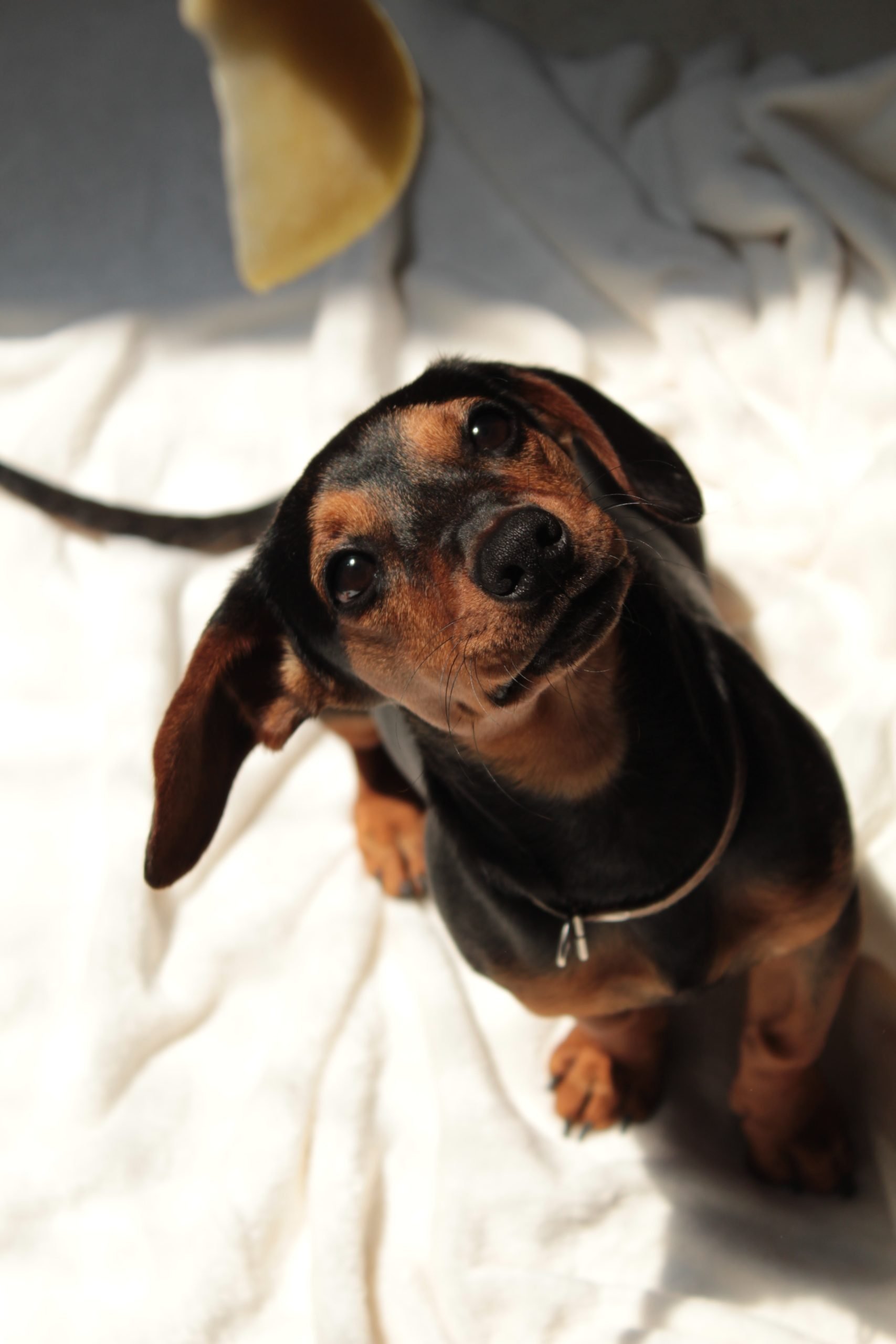
The earliest clues are behavioral. Your dachshund might hesitate before jumping onto the couch — a dog who used to vault up like a furry missile now pauses, calculates, maybe gives up. You might notice them arching their back, walking stiffly, or yelping when picked up. Some dogs become unusually quiet or stop eating.
Another early sign is what I call the “slow sit.” Instead of dropping into a sit with their typical enthusiasm, your dog lowers themselves gingerly, like someone with a sore lower back easing into a chair. If you see this, start paying close attention.
Moderate Signs — Time to Call the Vet
When things progress, you’ll see more obvious mobility changes. Your dachshund may walk with a wobbly rear end, stumble on turns, or cross their back legs while walking. They might cry out suddenly when moving a certain way, or tremble in the back legs even when resting.
A dog with moderate IVDD might also show what’s called “proprioceptive deficits” — they don’t know where their back feet are. You might see them knuckling over (walking on the top of the paw instead of the pad). If you notice this, it’s vet time. Not next week. Now.
Severe Signs — Emergency
Dragged rear legs, inability to stand, or a complete loss of feeling in the hindquarters are all emergency signs. A paralyzed dachshund needs immediate veterinary attention — ideally at a facility with a veterinary surgeon. Do not wait to “see if it gets better.” With IVDD, time is spinal cord function.
Also watch for loss of bladder or bowel control. If your dachshund starts dribbling urine or seems unable to posture to pee, that’s a neurological emergency, not a house-training regression.
Dachshund Back Problems Prevention Strategies
Here’s the good news: while you can’t change your dachshund’s genetics, you can dramatically reduce their risk of a serious spinal episode. Dachshund back problems prevention comes down to a handful of habits that become second nature once you commit to them.

Weight Management — The Single Most Important Thing
Every extra pound on a dachshund is four extra pounds of stress on their spine. I’m not exaggerating — the biomechanics of a long-backed, short-legged dog mean that excess weight multiplies spinal loading. A dachshund at their ideal weight already has a spine working overtime. An overweight dachshund is a disc herniation waiting to happen.
Work with your vet to determine your dog’s ideal weight, then be ruthless about maintaining it. Measure food rather than free-feeding. Limit treats to 10% of daily calories. And those sad eyes begging for table scraps? They’re counting on you to say no — because their spine can’t.
No Jumping On or Off Furniture
This is the hardest habit for dachshund owners to enforce, and the most important. Every time your dachshund launches off the couch, their spine absorbs the full impact of a body that’s biomechanically unsuited for jumping. The landing compresses the discs, and over time, those micro-traumas add up.
The solution isn’t “never let them on the furniture” — it’s giving them a safe way up and down. A foldable wooden dog ramp next to the couch or bed gives your dachshund independence without the impact. Train them to use it consistently — most dachshunds learn ramp skills fast, especially if you use treats as motivation.
For a deeper dive into ramp options, check out our guide to the best dog ramp for dachshunds.
Use a Harness, Not a Collar
A collar puts pressure directly on the cervical spine — the neck vertebrae that are already part of your dachshund’s long, vulnerable back. One sudden lunge on a collar can be enough to trigger a disc herniation. A well-fitted harness distributes pressure across the chest and shoulders, bypassing the spine entirely.
Not all harnesses are equal, though. Some put pressure on the wrong points or allow too much pulling. We’ve reviewed the options in our guide to the best harness for dachshunds — start there if you’re not sure which one to choose.
Proper Bedding Matters More Than You Think
Your dachshund sleeps 12 to 14 hours a day. That’s a lot of time spent on whatever surface you’ve chosen for them. A thin, poorly supported bed means their spine sags into unnatural positions all night long — like a person sleeping on a hammock every single night.
An orthopedic dog bed with genuine memory foam support keeps the spine aligned during those long sleeping hours. We like the EHEYCIGA Orthopedic Dog Bed because it offers multi-layer support with a waterproof liner — because accidents happen, especially with dogs recovering from back episodes. For more options, see our full review of the best dog bed for dachshunds with back problems.
Exercise: The Right Kind, Done Right
Dachshunds need exercise — but the right kind. Controlled walks on harness (never collar) are ideal. Short, frequent walks beat one long hike. Avoid activities that involve twisting, sudden stops, or jumping: frisbee, agility jumps, and rough play with larger dogs are all risk factors for dachshund back problems.
Swimming is excellent for dachshunds — it strengthens core muscles without any spinal impact. If you have access to a safe, clean body of water (or a dog therapy pool), consider adding swim sessions to your routine. Strong core and back muscles act like a natural corset, supporting that long spine.
One more thing: stairs. Carrying your dachshund up and down stairs is one of the simplest dachshund back problems prevention habits you can adopt. Even a few stairs count. If you have a two-story home, consider baby gates at the bottom of the staircase.
What to Do If Your Dachshund Has a Back Episode
Despite your best prevention efforts, episodes can still happen. Here’s what to do — and what not to do — if your dachshund shows signs of a spinal problem.
Step 1: Crate Rest Immediately
The moment you suspect a back problem, restrict movement. A crate or small pen is ideal — just enough room to stand up and turn around. No walking around the house. No stairs. No jumping. Carry your dog outside for bathroom breaks on a short leash, then right back to the crate.
I know it feels cruel. Your dachshund will protest — loudly. But crate rest prevents further disc extrusion and gives the inflammation time to subside. It’s not optional; it’s the single most effective conservative treatment for mild to moderate IVDD episodes.
Step 2: Get to the Vet — Quickly
Call your vet and tell them you suspect IVDD. Most will fit you in quickly because the timeline matters. If your regular vet can’t see you within hours, find an emergency or specialty hospital. For severe signs (dragging legs, no feeling in toes), go immediately — don’t wait for an appointment.
Your vet will perform a neurological exam and likely recommend imaging. X-rays can show some disc changes, but an MRI or CT scan gives the full picture of what’s happening with the spinal cord. These scans also determine whether your dog is a surgical candidate.
Step 3: Surgery or Conservative Management?
For Stage 1 and 2 cases, many vets recommend conservative treatment: crate rest (4-8 weeks), anti-inflammatory medication, muscle relaxants, and pain management. The majority of mild cases resolve with this approach.
For Stage 3-5 cases, or when conservative treatment fails, surgery may be recommended. Hemilaminectomy — removing a portion of the vertebra to relieve pressure on the spinal cord — has good outcomes when performed promptly, especially for dogs who still have deep pain sensation.
Supportive Care During Recovery
Whether your dachshund is recovering from surgery or a conservative treatment episode, a back brace can provide external support to the spine during the healing process. The TIPOOP IVDD Dog Back Brace is designed specifically for post-IVDD recovery, offering adjustable compression and spine support without restricting front-end mobility.
For dogs who’ve lost rear leg function — temporarily or permanently — a stroller can maintain their quality of life and keep them part of daily walks. We’ve reviewed options in our guide to the best dog stroller for dachshunds with IVDD.
Recovery timelines vary widely. Mild cases may improve in 2-4 weeks. Post-surgical recovery typically takes 6-8 weeks of restricted activity, followed by a gradual return to normal movement. Dogs who’ve been paralyzed may take 3-6 months to regain function — and some will need assistive devices long-term.
Long-Term Management for Dachshunds with IVDD
If your dachshund has had one disc episode, they’re statistically more likely to have another. Long-term management is about reducing that risk and maintaining the best possible quality of life.
Lifestyle Adjustments That Become Routine
Every dachshund back problems prevention habit becomes even more critical after an episode. Ramp access to all furniture. Harness for all walks. No stairs. Controlled exercise. These aren’t temporary restrictions — they’re the new normal. The good news is that most dachshunds adapt quickly, and the routine becomes second nature for both of you.
Invest in supportive bedding again, or upgrade if your current bed is getting flat. The EHEYCIGA Orthopedic Dog Bed holds up well over time and the waterproof liner is especially useful for dogs with compromised bladder control during recovery.
Supplements Worth Considering
While no supplement can reverse disc calcification, some may support overall spinal health and joint function. Talk to your vet about:
Glucosamine and chondroitin — These support cartilage health and may help slow degeneration in remaining healthy discs. Look for dog-specific formulations with proven bioavailability.
Omega-3 fatty acids — Fish oil provides anti-inflammatory benefits that may help manage chronic low-grade inflammation around the spine. Make sure you’re using a product tested for heavy metals and oxidation.
Vitamin C — Some holistic vets recommend vitamin C for collagen support, though the evidence is mixed. If you try it, start with a low dose and watch for stomach upset.
Physical Therapy and Rehabilitation
Canine rehabilitation therapy has come a long way. If you have access to a certified canine rehabilitation practitioner (CCRP), the results can be remarkable — especially for dogs recovering from disc herniation or surgery.
Underwater treadmill therapy builds core and hind-end strength with minimal spinal stress. Laser therapy reduces inflammation around affected discs. Passive range-of-motion exercises keep joints healthy during crate rest. And targeted core strengthening exercises help those supporting muscles do their job better.
For a paralyzed dachshund learning to walk again, rehab therapy combined with a cart (dog wheelchair) for support can mean the difference between a dog who’s confined and a dog who’s mobile and happy. Many dachshunds in wheels live full, joyful lives.
Monitoring and Ongoing Care
After an IVDD episode, schedule regular veterinary checkups every 6 months. Your vet should perform a brief neurological exam at each visit — checking proprioception, reflexes, and pain response. Catching a new disc problem early, before it progresses to Stage 4 or 5, dramatically improves outcomes.
Keep a “back health journal” for your dachshund. Note any changes in gait, willingness to jump (or refusal to), appetite shifts, or signs of pain. This gives your vet valuable data and helps you spot patterns before they become emergencies.
And remember: a dachshund with IVDD can still have a wonderful life. Many live 12-16 years with careful management. The key is staying vigilant, making prevention a daily habit, and acting fast if you see warning signs.
Frequently Asked Questions
At what age do dachshund back problems typically start?
Disc calcification can begin as early as 6 months in dachshunds, but clinical IVDD episodes most commonly appear between ages 3 and 7. That said, I’ve known dachshunds who had their first episode at 10 and others at 2. Age of onset varies, and younger-onset cases tend to be more severe. Start prevention habits young — your puppy’s spine is already changing.
Can dachshund back problems be completely prevented?
Honestly, no. The genetic predisposition is built in. What dachshund back problems prevention can do is significantly reduce the risk and severity. A dachshund who stays lean, uses ramps, wears a harness, and sleeps on orthopedic support has a much lower chance of a severe episode than one who’s overweight, jumps off furniture, and pulls on a collar. Prevention stacks the odds in your dog’s favor.
Is surgery always necessary for IVDD?
No. Stages 1 and 2 often respond well to conservative management — strict crate rest, medication, and time. Surgery becomes more likely for Stage 3 and above, and it’s strongly recommended for Stage 5 to give the dog any chance of regaining function. The decision depends on severity, timing, your dog’s overall health, and your access to a qualified surgeon. Get a referral to a neurologist or orthopedic surgeon for Stage 3+ cases.
Can a paralyzed dachshund live a good life?
Yes — many do. A paralyzed dachshund can live a full, happy life with the right support. Dog wheelchairs (carts) give them mobility. Belly bands and diapers manage incontinence. Physical therapy can restore function in some cases. I’ve met dachshunds in wheels who still chase squirrels, bark at mail carriers, and rule their households. It’s an adjustment, no question, but it’s not the end of a good life.
Should I get pet insurance for my dachshund?
If you’re getting a dachshund puppy, pet insurance is worth serious consideration. IVDD surgery can cost $3,000 to $8,000+ depending on your location and the complexity of the case. MRI alone often runs $1,500-3,000. Policies that cover hereditary conditions (and dachshund back problems count) are more expensive but can save you from a devastating financial choice. Get insurance before any symptoms appear — pre-existing conditions are typically excluded.
Are miniature dachshunds more prone to back problems than standards?
Both sizes carry the chondrodystrophic gene, so both are at elevated risk. Some studies suggest miniature dachshunds may have slightly higher IVDD rates, possibly because they’re more often allowed to jump (they’re small and light, so owners assume it’s fine — it’s not). The prevention strategies are the same regardless of size: weight management, no jumping, harness walking, orthopedic support, and ramps for furniture access.
Final Thoughts on Dachshund Back Problems Prevention
Owning a dachshund means accepting that their back is always going to be a consideration. But it doesn’t mean living in fear. The habits that protect your dachshund’s spine — lean weight, ramps, harnesses, orthopedic bedding, controlled exercise — become routine quickly. And they work.
Every dachshund owner I’ve spoken with who’s been through an IVDD episode says the same thing: “I wish I’d known earlier. I wish I’d started prevention from day one.” Consider this your day one. Whether your dachshund is eight weeks old or eight years old, the best time to start protecting their back is right now.
If your dog is currently showing signs of a back problem, stop reading and call your vet. If you’re here to get ahead of things — welcome. You’re already doing more than most dachshund owners. Keep going.
You Might Also Enjoy
If you found this guide helpful, these related articles dive deeper into specific products and strategies for protecting your dachshund’s back:
→ Best Dog Ramp for Dachshunds — Our top picks for safe furniture access
→ Best Dog Bed for Dachshunds with Back Problems — Orthopedic beds that support the spine
→ Best Harness for Dachshunds — Protect the neck and spine on every walk
→ Best Dog Stroller for Dachshunds with IVDD — Maintain mobility and quality of life